Oct 19, 2026Industry Information
Food & Pharma Visual Inspection Machine: What It Detects
What a food-grade vision machine actually catches on nuts, herbs, seeds and medical devices - and what it cannot check.
Why Food Processors Move from Manual Sorting
Manual sorting works until volume does not: a sorter checking thousands of nuts, herbs or snack pieces per hour misses defects from fatigue, and two sorters rarely agree on the same borderline piece. A food-grade visual inspection machine applies one pass/fail rule to every piece at line speed. This article explains what the machine detects per the brochure - and what it cannot check, so you can judge whether it fits your quality problem.
What It Detects on Food Products
The brochure lists nine defect families for food: mold, discoloration, insect damage, broken skin, breakage, deformation, size, maturity and grade, among others. In buyer terms:
• Mold and discoloration: early spoilage and browning that decide whether a batch is still sellable.
• Insect damage and broken skin: pest damage and handling marks that cut the saleable yield.
• Breakage and deformation: pieces that fail the shape requirement, caught before packing.
• Size, maturity and grade: dimensional and quality-tier checks, so a batch is uniform instead of mixed.
What It Detects on Medical Devices
The brochure's medical device checks are the molded-part defect family, including but not limited to: short shots, pits, blocked holes, cracks, damage, burrs, mold residue, flow marks, impurities, scratches, dents, dimensional defects, deformation, discoloration, color variation, material mixing and contamination - plus hair, which matters for cleanroom-finished components. Dimensional checks cover ID, OD and cross-section diameter, with product thickness available when one additional camera is configured.
How Detection Works
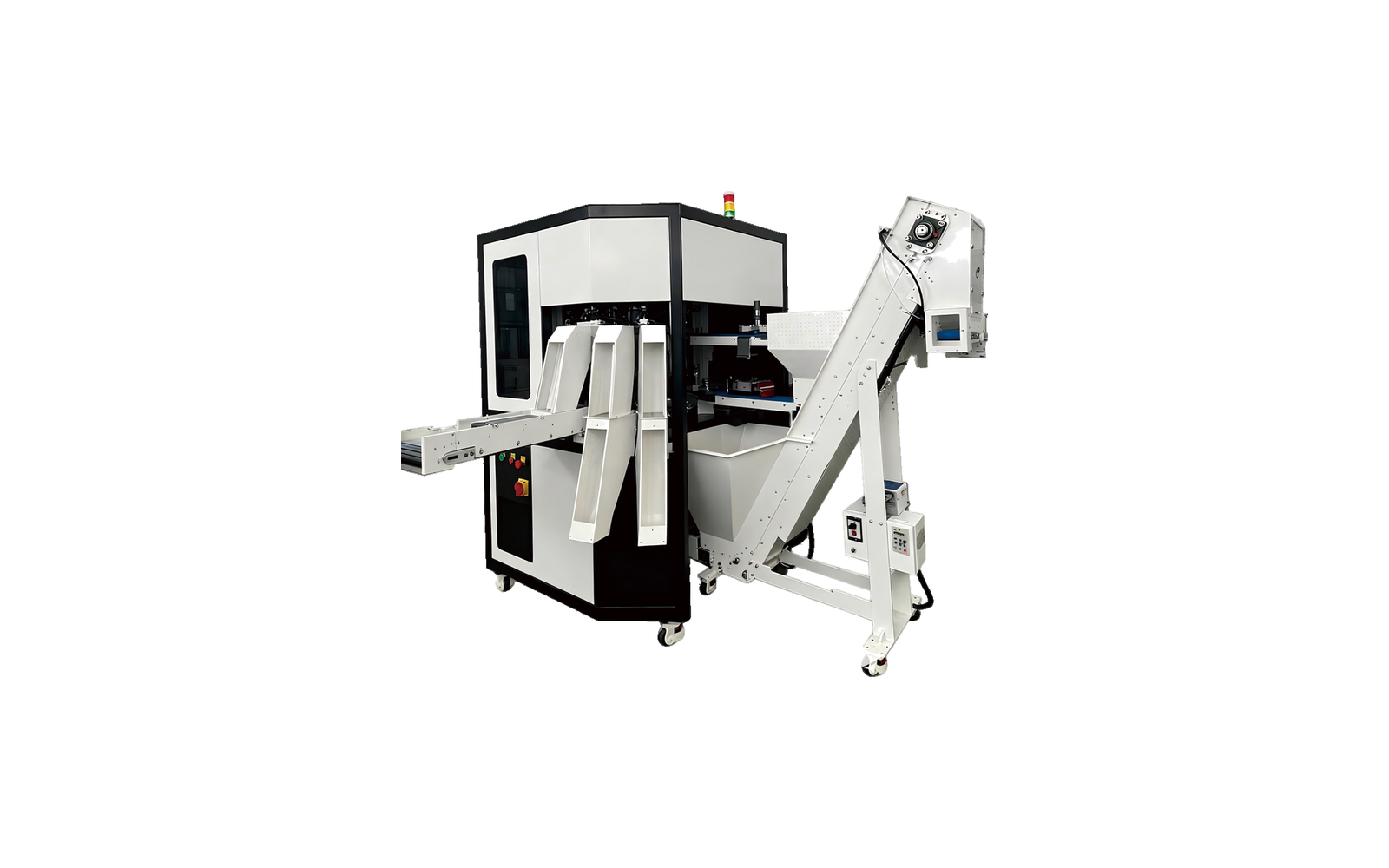
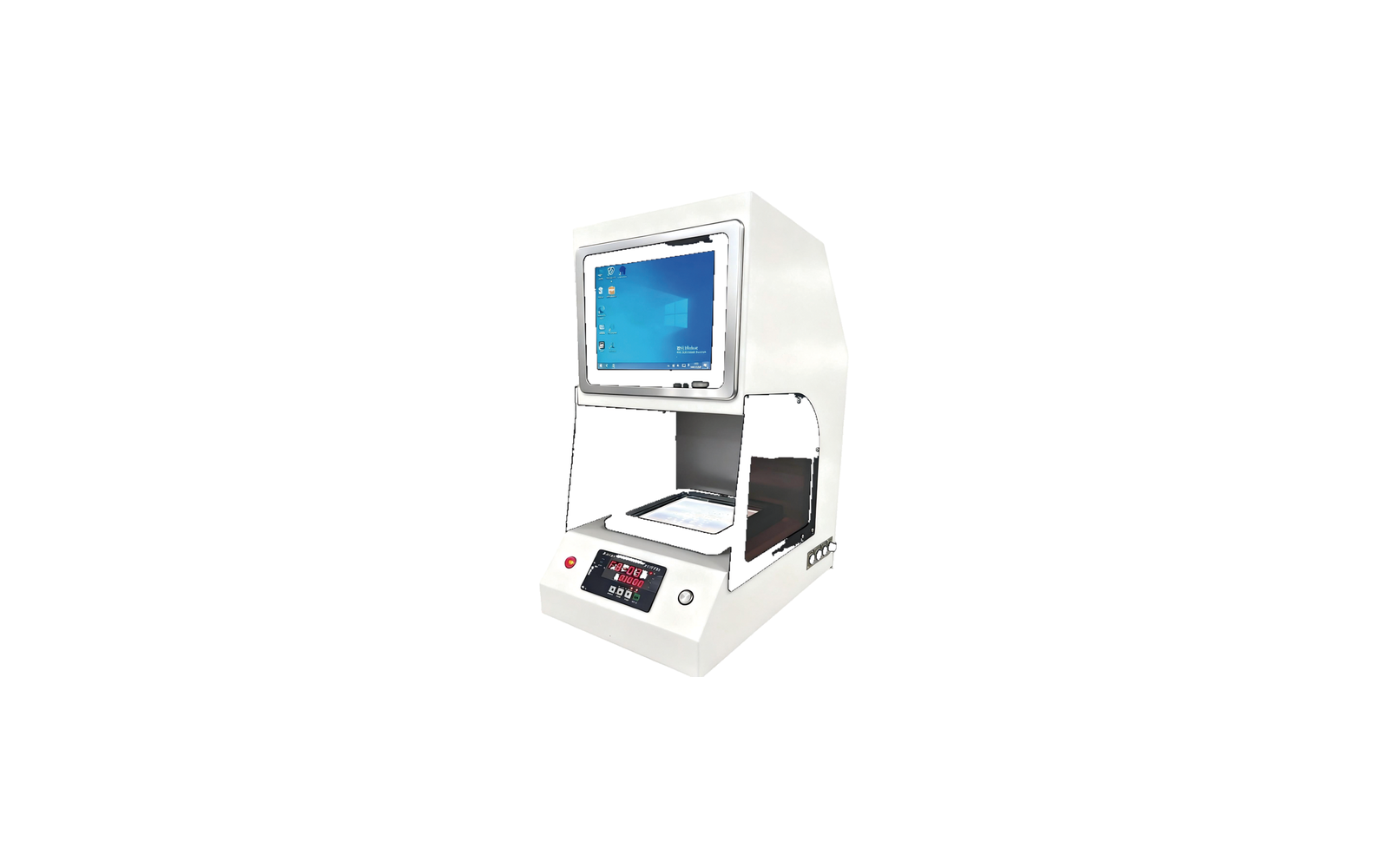
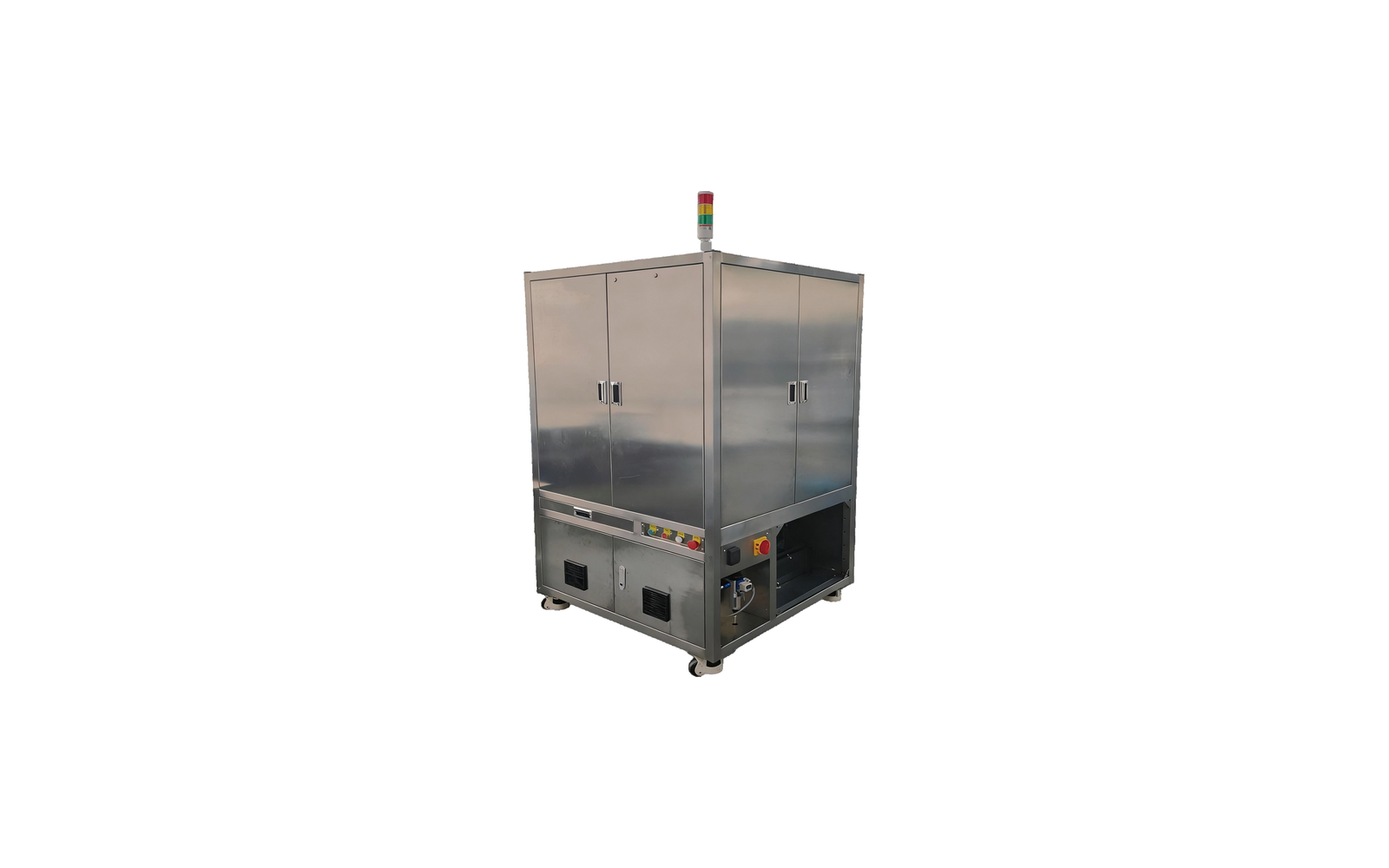
Parts move on a glass turntable (800 mm standard, larger on request) while 1-12 cameras run full appearance and dimensional inspection. The brochure describes the system as AI-driven self-learning that adapts to product variations, and as fully traceable and data-driven: inspection records, images and OK/NG decisions are logged for quality audits. Treat the brochure figures - repeatability ±0.01 mm, throughput 120-840 pcs/min depending on product size and camera count - as brochure figures, not results on your parts. The acceptance thresholds for your batch should be set on your own samples during the sample test, before quotation is finalized. Full specifications and configuration rules are in the HZXX-JC02 model guide (/posts/hzxx-jc02-food-pharma-model-guide).
Food-Grade Materials
Contact parts are food-grade stainless steel per GB4806.9-2016. If your market requires other food-contact standards, such as US or EU food-contact compliance documents, ask our engineers when you inquire - the default material standard is fixed, and what can be supplied for your market is confirmed per project.
What It Cannot Check
Vision inspection checks what cameras can see. It does not detect chemical or microbial contamination, taste or odor, and it is not a substitute for sterile packaging validation or pharmaceutical process qualification. Foreign objects inside opaque products are also outside a surface camera's scope - that is the territory of the X-ray foreign object detection machine (/posts/x-ray-foreign-object-detection).
Which Machine Fits Which Line
• The HZXX-JC02 is the food-grade choice for edible products and medical device components; the full model guide with specs is here (/posts/hzxx-jc02-food-pharma-model-guide).
• The walnut kernels machine (/products/walnut-kernels-ai-vision-inspection-machine) is the specialized option for walnut kernel sorting.
• The HZXX-JC01 standard model (/posts/hzxx-jc01-single-table-inspection-machine) is the general-purpose appearance and dimension machine.
• The visual counting and weighing machine (/posts/visual-counting-weighing-machine) verifies batch count and weight on packing lines.
• Not sure whether you need incoming or in-line inspection? Start with incoming inspection vs in-line inspection (/posts/incoming-inspection-vs-inline-inspection).
Frequently Asked Questions
Can it detect metal or glass contamination?
No - visual inspection checks surface appearance, not material composition. Contamination inside a product is checked by the X-ray foreign object detection machine (/posts/x-ray-foreign-object-detection).
What is the smallest defect it catches?
The brochure publishes a repeatability of ±0.01 mm but does not publish a minimum defect size per product. The smallest catchable defect is confirmed on your samples during the sample test - send your worst-case defective parts and the factory returns images of what was caught.
Is it EC 1935/2004 or FDA compliant?
The brochure states food-grade stainless steel contact parts per GB4806.9-2016, the Chinese food-contact standard. It does not claim US or EU food-contact compliance - ask us for the compliance documents available for your market before ordering.
Does it work on tea leaves or herbs?
Medicinal herbs are on the brochure's inspection target list. Tea leaves are not explicitly listed - send samples and your defect list, and the factory confirms whether the configuration fits your product.
Running a Sample Test
Send samples of good parts and the defects you must catch, together with your acceptance thresholds, to Shengyi New Material (Huzhou) Co., Ltd. We run a sample inspection and return the images and decision log, so the machine is configured to your quality standard before it ships. The sample arrangement - quantity, logistics and timeline - is confirmed when you write to us.
Next Step
Tell us your products, batch sizes and the defects you must catch. Contact the team (/contact-us) - Monica (+86 138 5726 5705) or Arya (+86 173 2430 9735), or email monica@aivisioncheck.com.