Oct 19, 2026Industry Information
HZXX-JC02 Food & Pharma Visual Inspection Machine: Model Guide
Food-grade inspection machine for nuts, herbs, snacks, seeds and medical devices: 1-12 cameras, ±0.01 mm repeatability and GB4806.9-2016 stainless steel contact parts.
What This Machine Does
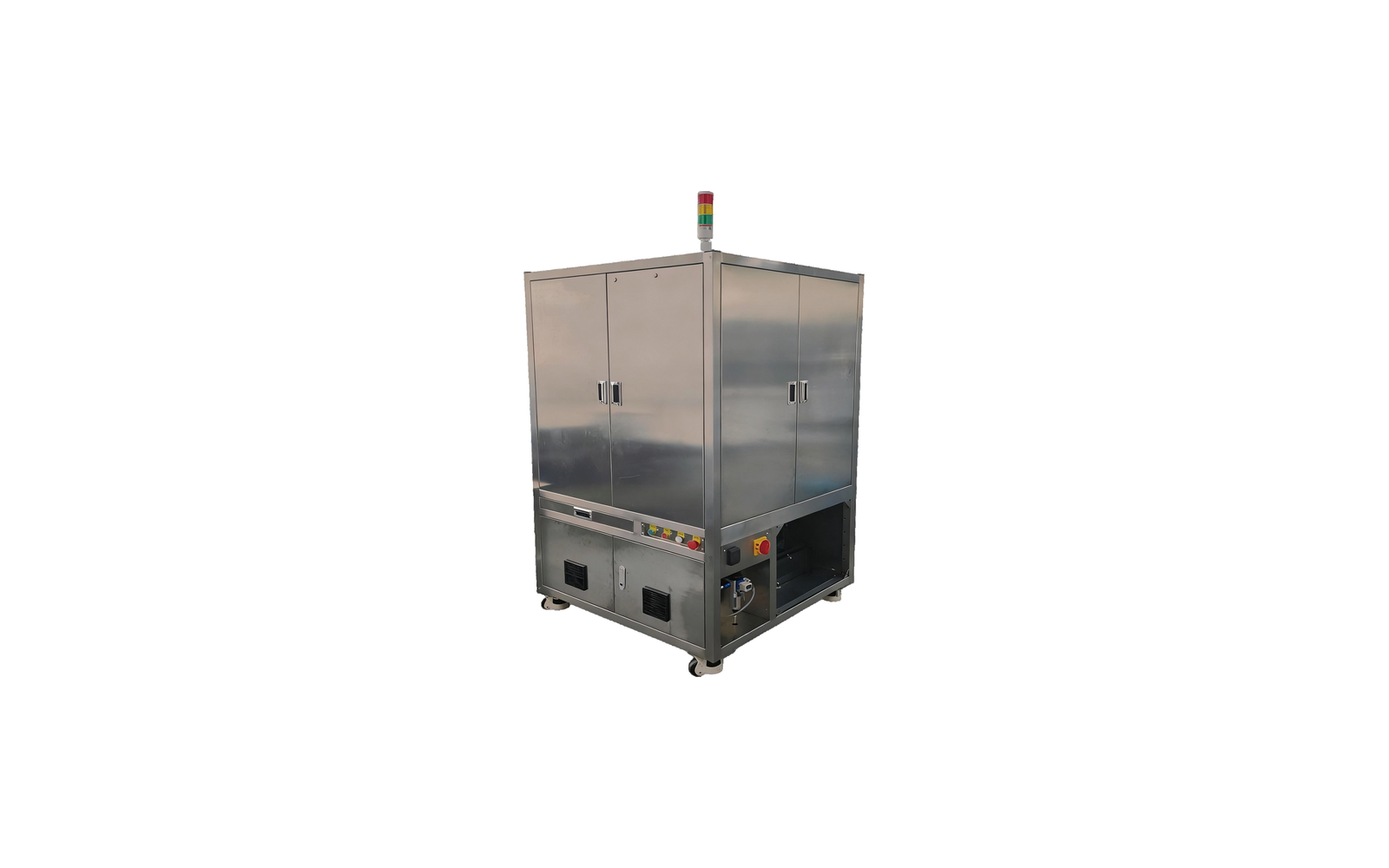
Food processors sorting nuts, herbs and snacks by hand, and molders shipping medical device parts, face the same problem: defects that are small, frequent and easy to miss by eye. The HZXX-JC02 is the food-grade machine in the Shengyi New Material (Huzhou) Co., Ltd. line, built for full appearance and dimensional inspection of food products and medical devices. Everything below comes from the machine brochure; the machine itself is shown on the HZXX-JC02 product page (/products/hzxx-jc02-food-pharma-visual-inspection-machine), and company background is on the About page (/about).
HZXX-JC02 Specifications
• Model: HZXX-JC02.
• Machine size: 1200 x 1200 x 1817 mm.
• Inspection targets: nuts, medicinal herbs, snacks, seeds and medical devices, among others; the equipment is customized to product size.
• Cameras: 1-12, for full appearance and dimensional inspection.
• Dimensional checks: ID, OD and cross-section diameter; product thickness inspection requires adding one camera.
• Glass turntable: 800 mm; larger turntables can be customized for special cases.
• Repeatability: ±0.01 mm.
• Throughput: 120-840 pcs/min, depending on product size and the number of cameras configured.
• Materials: food-grade stainless steel contact parts per GB4806.9-2016.
All specifications above come from the Shengyi New Material (Huzhou) Co., Ltd. machine brochure and are confirmed per configuration at quotation. The brochure does not list a fixed product size range - the equipment is customized to your product.
What It Detects in One Line
The food checks cover mold, discoloration, insect damage, broken skin, breakage, deformation, size, maturity and grade; the medical device checks cover the molded-part defect family plus hair, together with ID, OD and cross-section diameter. What each defect means for your line, and what the machine cannot check, is explained in what a food and pharma inspection machine detects (/posts/food-pharma-visual-inspection-machine-what-it-detects).
How Inspection Runs: Turntable, Cameras and AI
Parts move on the 800 mm glass turntable while the cameras run full appearance and dimensional inspection. Repeatability is ±0.01 mm, and throughput is 120-840 pcs/min depending on product size and the number of cameras configured. The brochure describes the system as AI-driven self-learning that adapts to product variations, and as fully traceable and data-driven: inspection records, images and OK/NG decisions are logged for quality audits.
Food-Grade Materials and Cleaning
Contact parts are food-grade stainless steel per GB4806.9-2016. For stricter cleaning or documentation requirements, confirm your product range and cleaning process with our engineers before ordering - the material standard is fixed, and the configuration is matched to your line at quotation.
Running a Sample Test
Send samples of good parts and the defects you must catch, together with your acceptance thresholds. The factory runs a sample inspection and returns the inspection images and the decision log, so the machine is configured to your quality standard before it ships. The sample arrangement - quantity, logistics and timeline - is confirmed when you write to us. Treat brochure figures as a starting point: detection rates and the smallest catchable defect are confirmed on your samples, and the acceptance criteria you set should come from your own quality standard. If you are drafting those criteria, start with how to define OK/NG defect criteria (/posts/defining-defects-ai-visual-inspection).
When Not to Choose This Machine
The brochure's listed scope is food products and medical devices inspected visually. Vision inspection does not detect chemical or microbial contamination, and it is not a sterile packaging or pharmaceutical process validation step - confirm those requirements separately. If your market needs food-contact or medical compliance documents beyond the brochure's GB4806.9-2016 statement, ask for them when you inquire.
Choosing Among the Shengyi Models
• The HZXX-JC02 is the food-grade option: choose it when your products are edible or medical device components and the contact-material standard matters.
• The HZXX-JC01 standard model (/posts/hzxx-jc01-single-table-inspection-machine) is the general-purpose appearance and dimension machine for hardware, seals and plastic parts.
• The visual counting and weighing machine (/posts/visual-counting-weighing-machine) verifies batch count and weight on packing lines.
• The integrated inspection and packaging machine (/posts/integrated-inspection-packaging-machine) inspects, counts and packs in one machine.
• The walnut kernels machine (/products/walnut-kernels-ai-vision-inspection-machine) is the specialized option for walnut kernel sorting.
• Not sure whether you need incoming or in-line inspection? Start with incoming inspection vs in-line inspection (/posts/incoming-inspection-vs-inline-inspection).
Frequently Asked Questions
Which products can it inspect?
Nuts, medicinal herbs, snacks, seeds and medical devices per the brochure; the equipment is customized to product size.
What defects does it catch?
Food: mold, discoloration, insect damage, broken skin, breakage, deformation, size, maturity and grade. Medical devices: the molded-part defect family plus hair. See the per-defect explanation here (/posts/food-pharma-visual-inspection-machine-what-it-detects).
How accurate is it?
The brochure publishes a repeatability of ±0.01 mm. Detection rates and minimum catchable defect size are not published per product - they are confirmed on your samples during the sample test.
Can it sort nuts?
Yes for edible nuts - nuts are on the brochure's inspection target list, and there is a dedicated walnut kernels machine (/products/walnut-kernels-ai-vision-inspection-machine). Note that "nuts" here means edible nuts; fastener nuts are covered by the optical sorting machine for fasteners (/posts/optical-sorting-machine-for-fasteners-buyers-guide).
What does it cost?
The price follows the configuration - cameras, turntable size and customization. The factors that move the price are explained in vision inspection machine cost: 7 price factors (/posts/vision-inspection-machine-cost-7-price-factors).
Is the data traceable?
Yes - the process is data-driven and traceable per the brochure: inspection records, images and decisions are logged for quality audits.
Next Step
Send your product samples - nuts, herbs, seeds or medical device parts - with the defects you must catch. We return inspection images and the decision log from a sample run, so the machine is configured to your quality standard. Contact the team (/contact-us) - Monica (+86 138 5726 5705) or Arya (+86 173 2430 9735), or email monica@aivisioncheck.com.