Industry Information
Rejected Lot Re-Screening: Vision Inspection as Containment
A defect escaped or a lot is suspect - how a vision inspection machine runs a 100% containment re-screen, the evidence it produces for the claim response, and the boundaries it cannot cross.
The Scenario Nobody Plans For
Somewhere between the sampling plan and the routine, a call comes in: a defect your customer found in a shipped batch - or your own audit just flagged a lot that may share the problem. Now the quality question inverts. The plan said sample; the situation says every part in that lot needs a decision before anything else ships. This is containment, and it is one of the most practical uses of a vision inspection machine: not the daily-rate production screen, but a time-boxed, evidence-producing re-screen of a suspect lot. This article walks what that re-screen involves, what records it produces for the claim response, and - just as important - the boundaries it cannot cross. The station-placement logic that decides where this fits in your flow is in incoming inspection vs in-line inspection (/posts/incoming-inspection-vs-inline-inspection).
What 100% Re-Screening Means on the Machine
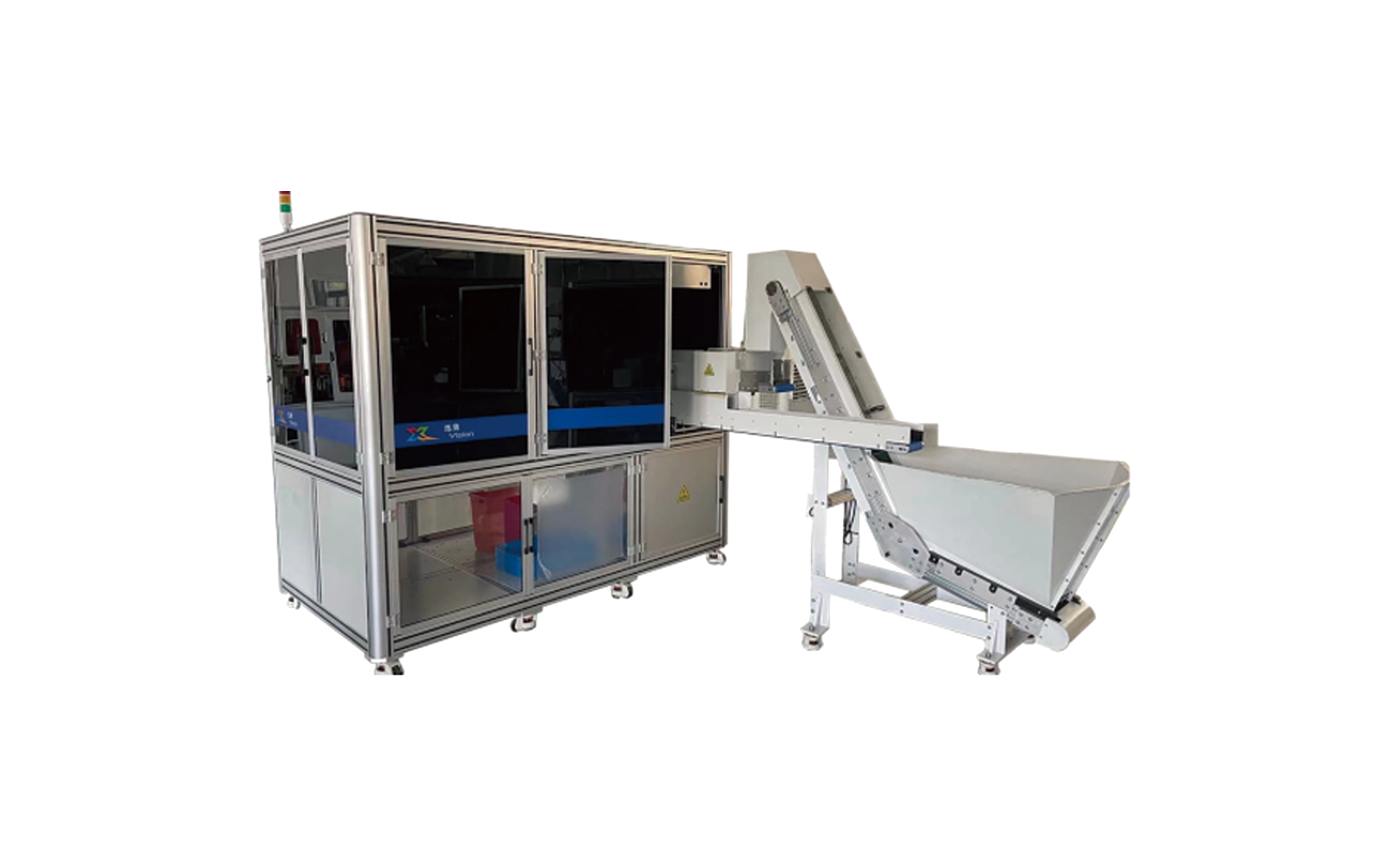
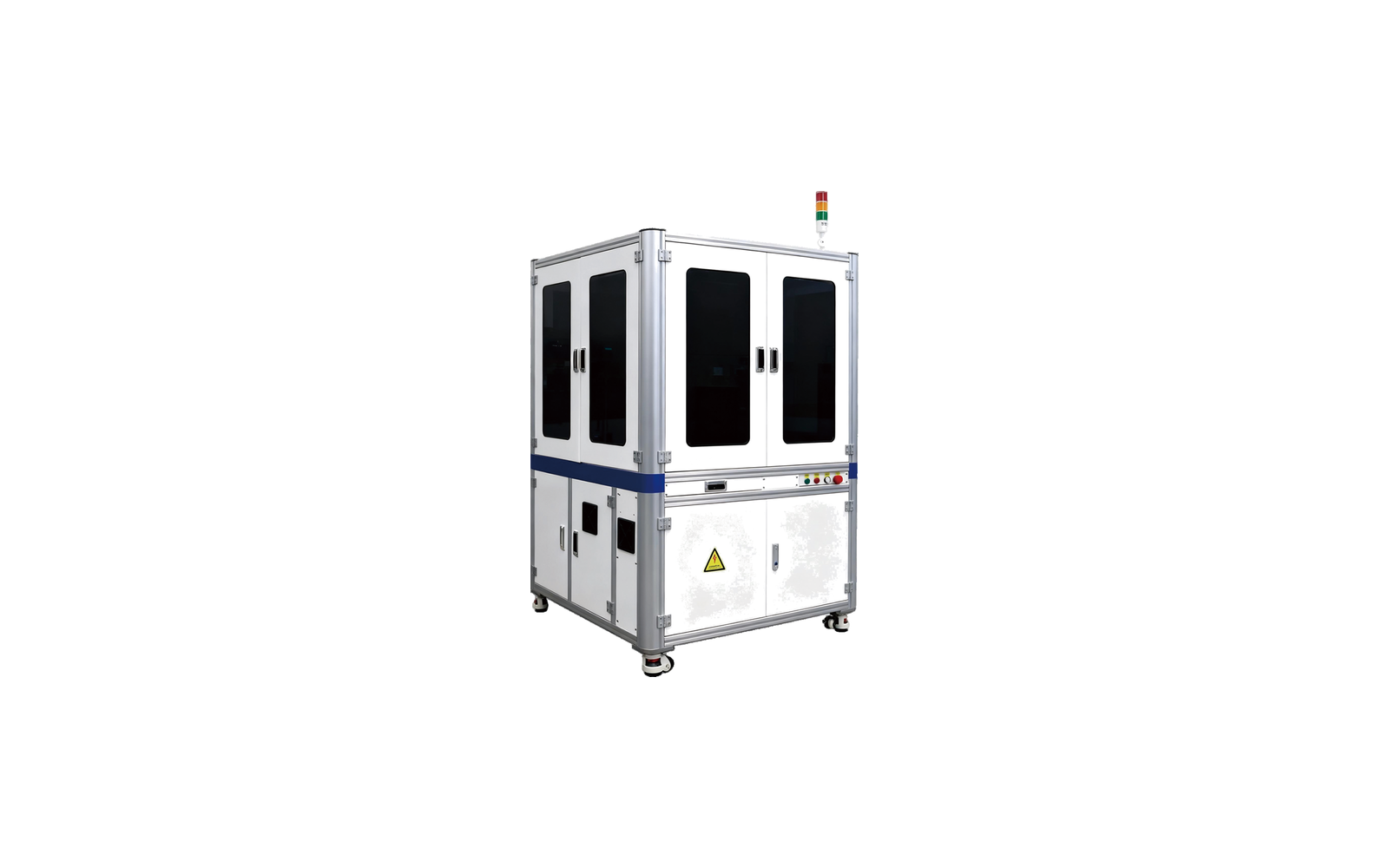
Per the brochure, the turntable machines run full appearance and dimensional checks part by part - every part is checked, not sampled. In a containment run that means every physically present part of the suspect lot passes the camera against a configured rule set, and each part gets a decision with a record behind it. The rate bands set the clock: 80-840 pcs/min on the dual-table model and 120-840 on the single-table models, 20-100 pcs/min on the compression machine for 8-35 mm rings, and 4-6 pcs/min on the large tensile lines (automatic-feeding figures, varying with circumference and capture count, per the brochure). A containment run of large rings is therefore a different planning exercise than a containment of small O-rings - depending on lot size, the difference between a run measured in hours and one measured in days.
Setting the Containment Criteria
The rule set for a containment run comes from the claim, not from the standard inspection recipe:
• Start from the escaped defect family - the customer's photos or your audit finding define the primary screen. The families are the brochure's list: short shots (non-fill), pits, cracks, burrs, flow marks, contamination and the rest, per defining defects for OK/NG inspection (/posts/defining-defects-ai-visual-inspection).
• Decide the borderline policy before the run: parts that sit between good and the claimed defect need a rule - hold for manual review, or reject - agreed before thousands of parts hit the table. The industry's boundary/limit samples give that rule something physical to point at, and they are the same limit samples the sample test is built from.
• Keep the run's criteria narrow and stated: a containment re-screen answers "how many parts in this lot show the claimed defect family", not "re-inspect everything anyone ever cared about".
What the Re-Screen Produces as Evidence
This is where the machine changes the claim conversation. The inspection produces per-part images and an OK/NG decision log - the same deliverable structure the sample test returns, described in the sample test walkthrough (/posts/vision-inspection-sample-test) and kept as records per vision inspection data traceability (/posts/vision-inspection-data-traceability). For a claim response that means: the suspect lot was 100% re-screened, the caught parts are documented with images, the passed parts have a logged decision each - the counts, the images and the logged decisions are what a containment report is built from, in the record configuration you set. What your customer receives is a containment report backed by records instead of a reassurance.
The Two Boundaries a Re-Screen Cannot Cross
• It covers the lot physically present, nothing else. Stock already shipped, stock at another warehouse, and lots that left weeks ago are outside the machine's reach - that exposure is a field-hold or stock-recovery decision, not a sorting decision, and pretending otherwise understates the risk.
• It does not find the root cause. A re-screen tells you how many parts carry the defect family; it does not tell you why. The cause-side analysis - which molding condition produces each family - is the companion step, covered in the molding-defects glossary (/posts/rubber-molding-defects-glossary). And the statistics question - how a defect slipped past the plan in the first place - is the sampling plans vs 100% inspection trade-off (/posts/sampling-plans-vs-full-inspection) conversation. Skip either and the next lot ships with the same problem.
Frequently Asked Questions
Should we hire a third-party containment sorting service instead?
For a one-off emergency, a third-party sorter is often the faster mobilization - that is what those services exist for, and a single suspect lot may not justify any capital decision. The case for own equipment builds with repeated claim exposure: the evidence chain stays under your control and the configuration is reusable. Whether a machine earns its place for containment alone is a decision-boundary question - see when a vision inspection machine is not worth buying (/posts/when-not-to-buy-vision-inspection-machine).
Can we re-screen parts we already shipped?
Only what you can physically retrieve. A customer-side screen or a return authorization is a separate commercial decision; the machine re-screens whatever lot is on your floor.
How fast can a containment run go?
Per the brochure's rate bands: 80-840 pcs/min on the dual-table model and 120-840 on the single-table models, 20-100 pcs/min on the compression machine for 8-35 mm rings, and 4-6 pcs/min on the large tensile lines (automatic-feeding figures). The lot size divided by the tested rate is your containment clock.
The escaped defect is subsurface / material-level - can the re-screen catch it?
No - the boundaries hold in containment: what cameras cannot see in production they cannot see in re-screening. Material-level and internal defects need the lab methods that find them.
Does a clean re-screen prove the process is fixed?
No - it proves that lot's condition on the checked families. The process question is answered upstream, and the plan question by revisiting what the sampling missed.
Next Step
If a suspect lot is sitting on your floor now: mark the claimed defect family, write the borderline policy, and send a sample of the lot plus the claim photos first - the sample test (/posts/vision-inspection-sample-test) verifies the configuration catches the claimed family on your parts - then the containment run scales that configuration to every part, returning the images and OK/NG decision log. Contact the team (/contact-us) - Monica (+86 138 5726 5705, WhatsApp) or Arya (+86 173 2430 9735), or email monica@aivisioncheck.com.