Oct 16, 2026Industry Information
Flying Camera Robot: High-Speed Inspection of Moving Parts
When the line cannot stop: how the flying camera robot images moving parts at 1000 mm/s, what the 95%+ detection rate means in practice, and which lines fit.
What This Machine Does
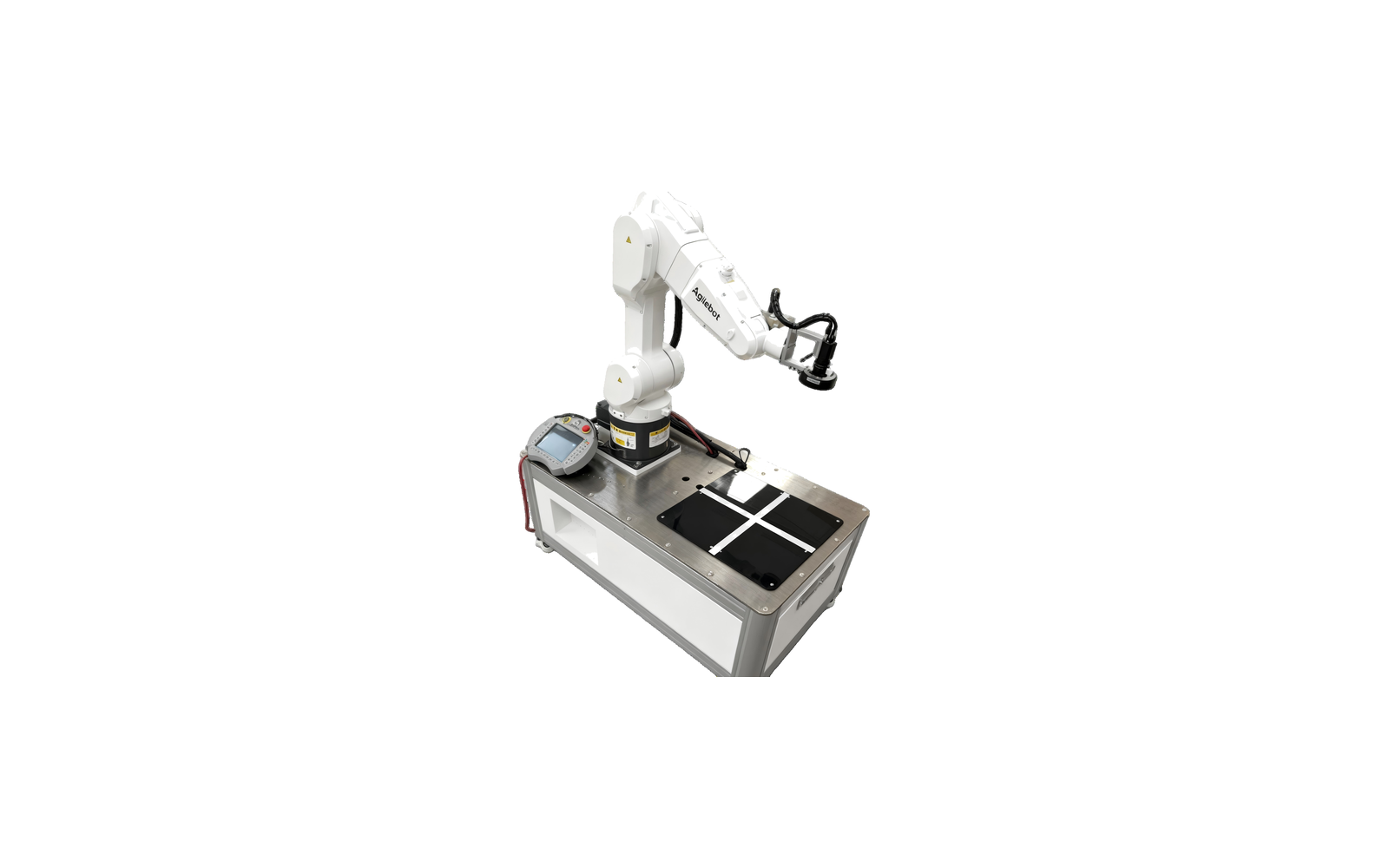
On some lines the part cannot stop for inspection - the line runs continuously and pausing it costs more than the defect you are looking for. Shengyi New Material (Huzhou) Co., Ltd.'s flying camera robot captures precise images of parts moving at line speed, using a proprietary system architecture with high-accuracy I/O. Configuration facts are on the flying camera robot product page (/products/flying-camera-robot).
When Parts Cannot Stop
Turntable machines and stationary cameras assume the part arrives and waits. On a continuous line for discrete parts - assembly and packaging, for example - that assumption breaks. This machine is the in-motion imaging option: the camera captures each position as the part passes, so high-speed vision inspection happens without slowing the line.
Key Specifications at a Glance
• Architecture: Proprietary system architecture and underlying algorithms, custom software development including integrated vision.
• Accuracy: High-precision, high-speed I/O with positional error under 2 pixels.
• Detection rate: 95%+ with near-zero missed critical defects, as stated in the brochure.
• Speed: Terminal line speed 1000 mm/s, capture per position approx. 0.3 s.
All specifications above come from the Shengyi New Material (Huzhou) Co., Ltd. machine brochure and are confirmed per configuration at quotation.
Which Moving Parts Fit
The machine suits discrete parts that can be imaged while moving. The capture positions, lighting and triggering are configured around your part geometry and motion profile - the brochure does not publish one-size-fits-all part dimensions, so fit is confirmed on your samples at quotation.
High-Speed Inspection: Motion Limits That Matter
Two figures define whether your line fits: terminal line speed of 1000 mm/s and approximately 0.3 s per capture position. If your line runs faster, or your part moves irregularly, confirm with the factory before assuming a fit - the capture positions are configured around your actual motion profile.
How It Compares with Other Machines
The mold monitor (/posts/injection-mold-monitor) watches a fixed point at the press; the wire, tube and cable surface inspection guide (/posts/wire-tube-cable-surface-inspection-buyers-guide) covers continuous products on a line; the HZXX-JC04 extrusion machine (/posts/hzxx-jc04-extrusion-inspection) targets latent cracks in extruded product. The flying camera robot is the option for discrete parts that must be imaged in motion - choose it when stopping the part is not acceptable. If you are still defining your defect criteria, start with how to define OK/NG defect criteria (/posts/defining-defects-ai-visual-inspection).
Detection Rate in Context
The brochure states 95%+ detection rate with near-zero missed critical defects; its test conditions are not published. Detection rates are confirmed on your parts at sample validation - your defect types and lighting conditions decide the real number, so treat the brochure figure as the design target, not the warranty.
What to Prepare Before You Ask for a Quote
Prepare: your line speed, part geometry, the defects to catch, and video of the parts in motion if you have it. These decide the capture positions and the detection configuration for your application. For budget context, see vision inspection machine cost: 7 price factors (/posts/vision-inspection-machine-cost-7-price-factors).
Frequently Asked Questions
What does "flying camera" mean?
The camera captures parts in motion with positional error under 2 pixels, so the line does not stop.
Is this a standard model?
It is configured around your motion profile and capture positions; fit is confirmed on your samples before quotation.
What if my line runs faster than 1000 mm/s?
The brochure's terminal line speed is 1000 mm/s; lines above that are confirmed with the factory before assuming a fit.
What detection rate does it reach?
Over 95% detection rate with near-zero missed critical defects, as stated in the brochure - confirmed on your samples at validation.
Next Step
Tell us your line speed, part geometry and the defects to catch. We confirm the capture positions and detection configuration for your application. Contact the team (/contact-us) - Monica (+86 138 5726 5705) or Arya (+86 173 2430 9735), or email monica@aivisioncheck.com.