Industry Information
How Many Cameras Does Your Vision Inspection Machine Need?
Camera counts in one machine line range from 1 to 32 - what the number buys (coverage, speed, thickness checks), why it varies by model, and how to land on your count.
The Number on the Quote That Confuses Everyone
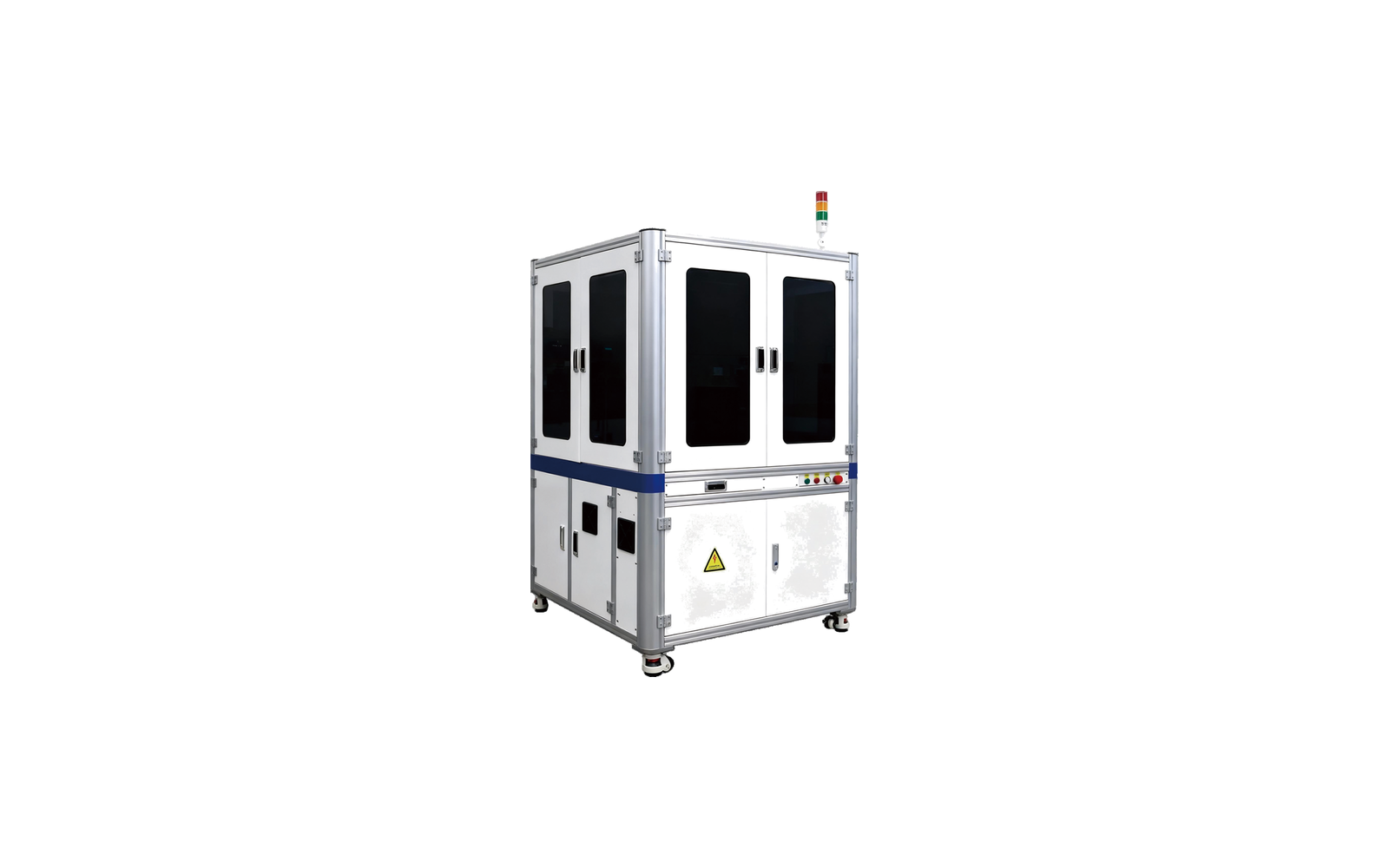
Camera count is the specification buyers ask about most and understand least. In one machine line it can legitimately range from 1 to 32 cameras: 1-16 on the standard turntable model, 3-16 on the single-table seal machine, 3-32 on the dual-table machine, 1-12 on the food and pharma machine, 4-15 on the compression machine, 6-8 on the double-layer flat-parts machine. The count is not a quality ranking - it starts from a question about your part: how many faces and features need to be captured, and how fast. This article explains what each additional camera buys, why the ranges differ by model, and how to arrive at the count you should be quoted.
What Each Camera Count Buys
Per the brochure's machine descriptions, cameras run full appearance and dimensional inspection - and the count scales with what that means for your part:
• Coverage: each camera watches specific faces and features. A flat washer needs fewer viewing angles than a part with threads, a chamfer and a bore. On several models, product thickness inspection requires adding one camera - the clearest example that each camera maps to a checking task.
• Speed: more cameras capture more features in the same rotation, which is one reason the brochure's throughput figures state they depend on the number of cameras configured.
• Cost: cameras are a configuration item, reflected in the quotation per configuration - covered in vision inspection machine cost: 7 price factors (/posts/vision-inspection-machine-cost-7-price-factors).
What more cameras do not mean, stated plainly: they are not advertised as better detection. Whether defects on your part are caught is confirmed in the sample test - a six-camera setup that misses your defect loses to a three-camera setup that catches it.
Why the Ranges Differ by Model
Each model's range reflects its structural job:
• The standard turntable model (1-16 cameras) handles mixed hardware and plastic parts from 6 to 80 mm - a wide task range needs a wide configuration range.
• The single-table seal machine (/posts/single-side-seal-inspection-machine) (3-16 cameras) and the dual-table machine (/posts/hzxxs02-dual-table-inspection-machine) (3-32 cameras) serve seal work; the dual-table inspects both faces across two stations, consistent with its two-sided task carrying the line's highest camera ceiling.
• The food and pharma machine (/posts/hzxx-jc02-food-pharma-model-guide) (1-12 cameras) covers nuts, seeds, snacks and medical devices where full appearance coverage matters more than dense dimensional arrays.
• The compression machine (/posts/hzxx-jc04-extrusion-inspection) (4-15 cameras) images rings under applied pressure for latent cracks; the double-layer machine (/posts/double-layer-inspection-machine) (6-8 cameras) runs flat parts on two inspection levels at high volume.
So the first filter is not "how many cameras" but "which machine type" - the size-based selection across the line is mapped in choosing an O-ring inspection machine by size (/posts/o-ring-inspection-machine-by-size), and the overall architecture in how a vision inspection machine works (/posts/how-vision-inspection-machines-work).
How Many Cameras Do You Need? Three Inputs
The count starts from three inputs you control or define:
1. Your defect list: each surface defect needs a viewing angle; dimensional features need measurement coverage. A marked-sample defect list is the specification the camera configuration is built against - see how to define OK/NG defect criteria (/posts/defining-defects-ai-visual-inspection). 2. Your faces and thickness: parts that must be checked on both faces, or need thickness measurement, push the configuration up (thickness explicitly requires an additional camera on several models). 3. Your rate target: if the sample-confirmed rate at the base configuration misses your target, more cameras is one of the levers - at a price impact the quotation will show.
A worked example of the logic: a small flat part with surface scratches only points to a low count; the same part with two faces to check, a thickness tolerance and a higher rate target points upward. The exact number is the configuration discussion's output. No marked defect list yet? Send around twenty known-NG and twenty known-good parts and mark them together with the engineer. And when you receive the configuration, ask for a reason per camera - "'twelve cameras' without a per-camera reason is a quotation question, not a specification." If a supplier declines to explain the count, treat that answer as information.
Frequently Asked Questions
How many cameras does a vision inspection machine have?
In our line, anywhere from 1 to 32 depending on the model: 1-12 on the food and pharma machine, 1-16 on the standard turntable model, 3-16 on the single-table seal machine, 3-32 on the dual-table machine, 4-15 on the compression machine, 6-8 on the double-layer machine - per the brochure.
Is more cameras always better?
No. More cameras buy more coverage per pass and higher throughput potential - at higher configuration cost. The right count is set by your defect list, faces and rate target, and proven on samples.
Why does another supplier offer more cameras for the same part?
Camera counts are not comparable across suppliers without the conditions: what each camera checks, what throughput and repeatability figures carry which conditions, and what the sample test showed. Ask any supplier - us included - for a reason per camera; the count is built from your defect list, not from the camera tally.
Can cameras be added later if my defects change?
Changes to the defect list mean re-confirming the configuration regardless of timing. The brochure does not state a field-retrofit path for adding cameras after purchase - raise likely future part families during configuration, and confirm upgrade options with the engineers there.
Do I pay for cameras I do not need?
That is exactly what the configuration discussion prevents: the count is built from your defect list and part geometry, confirmed at quotation - which is why the published process starts from samples, not from a price list.
Next Step
Send your part with the marked defect list, the faces that must be checked and your rate target. We return a camera configuration with a reason per camera - and the sample test proves it on your parts. Contact the team (/contact-us) - Monica (+86 138 5726 5705) or Arya (+86 173 2430 9735), or email monica@aivisioncheck.com.