Oct 26, 2026Industry Information
Manual Inspection vs Vision Inspection Machine: How to Compare
When manual inspection still makes sense, where it quietly fails, and how to compare the two on your own numbers before ordering a machine.
The Question Behind "Should We Replace Manual Inspection?"
Most plants asking this question are not motivated by technology. They are standing in one of three spots: inspection labor is hard to hire or keep, a customer complaint traced back to a missed defect, or volume has grown past what the inspection bench can absorb. The plain answer is that manual full inspection and a vision inspection machine are not simply old and new versions of the same thing - each fits different situations. This article lays out where each one wins, what automating inspection actually changes, and how to run the comparison on your own numbers rather than a supplier's claims.
Where Manual Inspection Still Makes Sense
Start with the case for keeping it manual:
• Low volumes: if daily inspection is measured in hundreds of pieces, a machine built for hundreds of pieces per minute solves a problem you do not have.
• High variety: parts that change every hour favor humans, who "re-configure" in seconds. Machines handle variety too, but through changeover work - what that involves is covered in changeover on vision inspection machines (/posts/vision-inspection-machine-changeover).
• Delicate or very large parts: some parts should not be fed through a bowl or a turntable. The tensile ring machines handle large rings individually - their value there is the logged record and the gentle, individual handling, not speed.
• Judgment calls: defects that experienced inspectors see by context - a machine only enforces the rules it was given.
The Quiet Costs of Manual Full Inspection
Manual inspection's costs are real but partially hidden:
• Linear labor: inspection hours scale with volume, one-for-one.
• Fatigue and inconsistency: a sorter at hour seven is not the sorter at hour one, and two sorters rarely agree on the same borderline piece - the pass/fail rule drifts across a shift.
• No records: manual inspection produces no per-part image, no decision log. When a customer complaint arrives, there is nothing to pull - the practical consequence is explained in vision inspection data traceability (/posts/vision-inspection-data-traceability).
• Escape risk concentration: your entire defect detection depends on individual attention, all day, every day.
What Changes When Inspection Is Automated
• One rule, every piece: the machine applies the same pass/fail criteria to every part, every shift - the criteria come from your defect list, written with how to define OK/NG defect criteria (/posts/defining-defects-ai-visual-inspection). How the whole chain works, from feeding to the logged decision, is covered in how a vision inspection machine works (/posts/how-vision-inspection-machines-work).
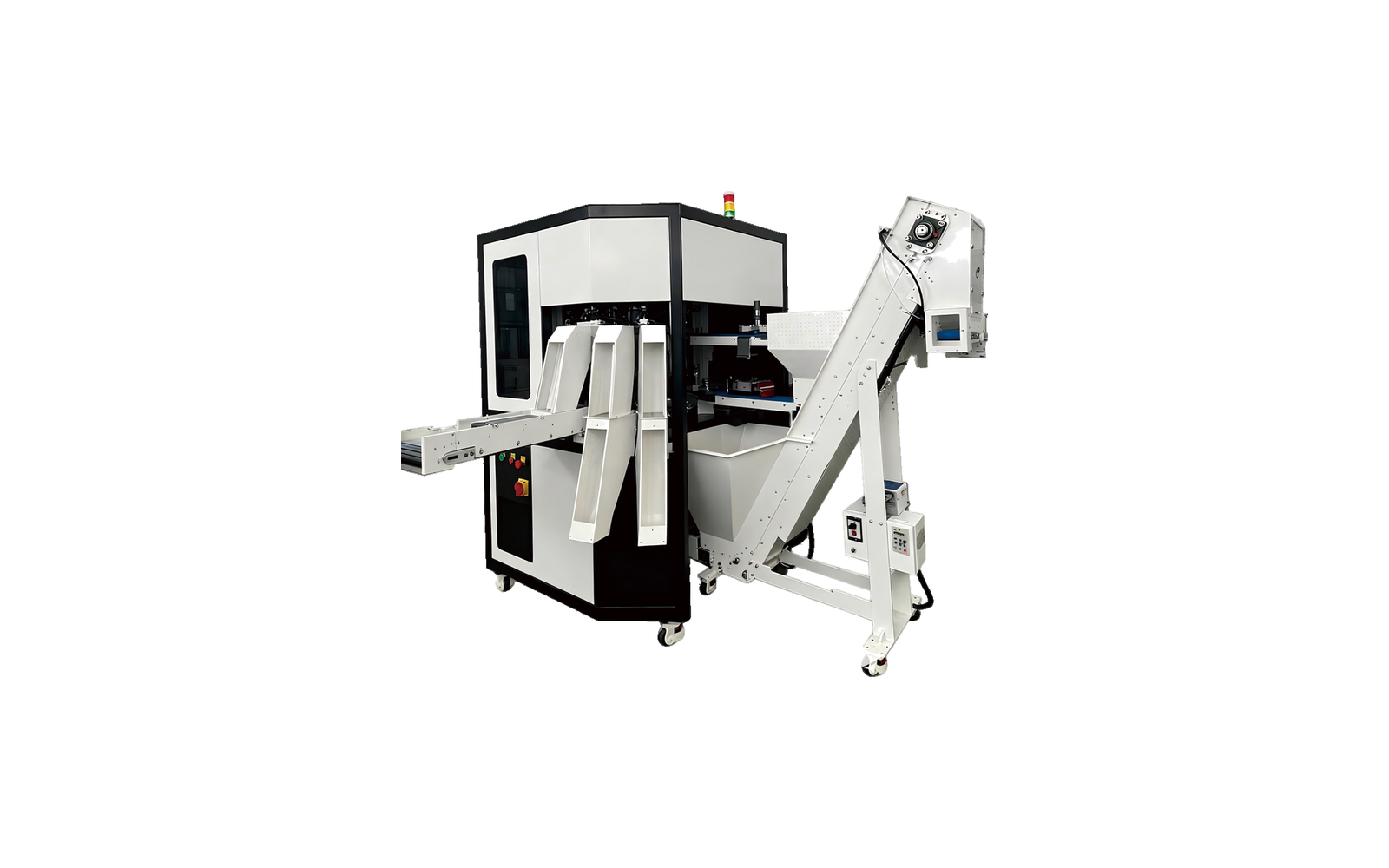
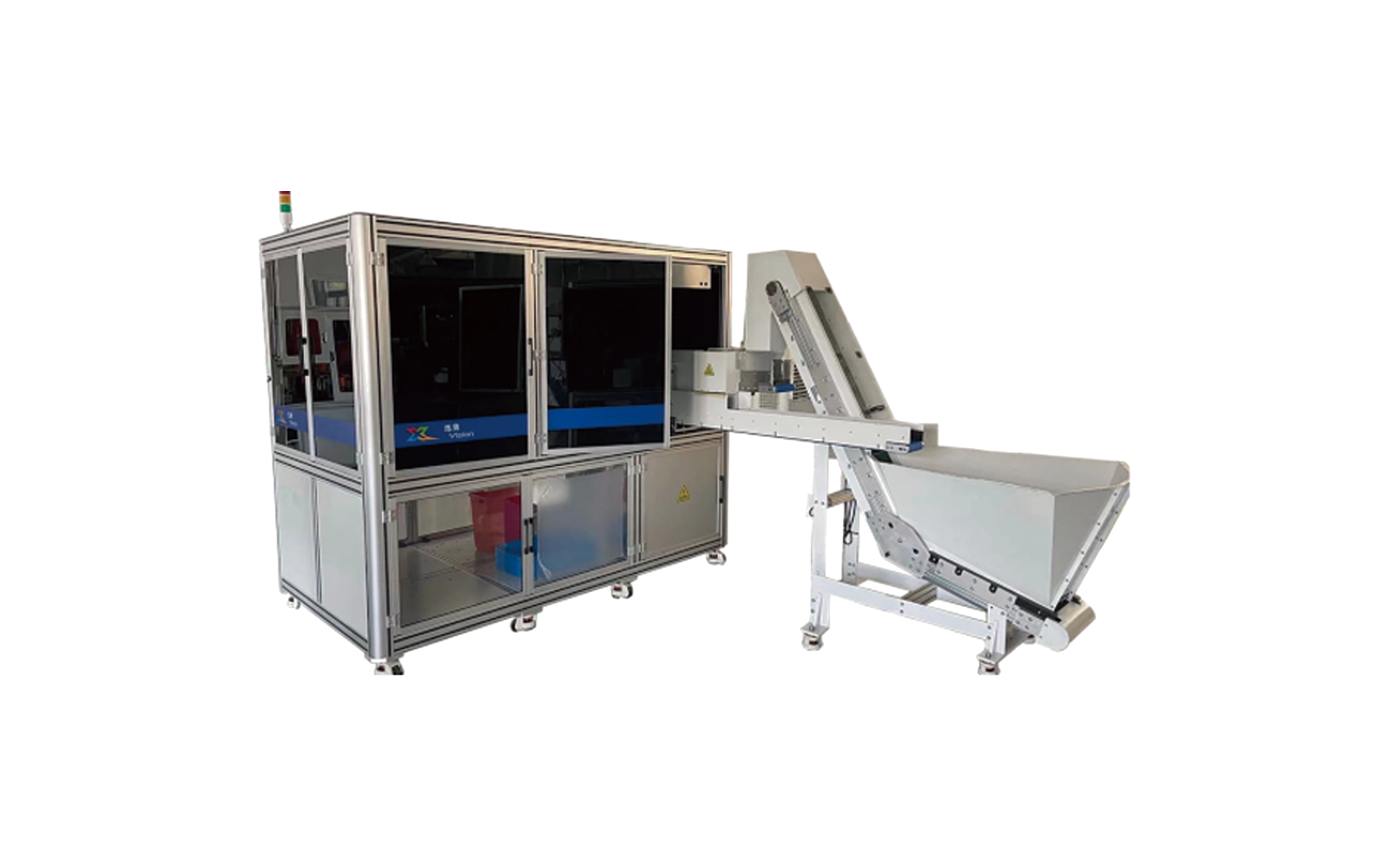
• Throughput as a range, with conditions: the brochure's rates depend on part size and camera count - for example 120-840 pcs/min on the turntable line. Your actual rate is confirmed on your samples, not taken from a catalog.
• Logged evidence: parts are imaged and their decisions logged, giving audits and complaint investigations something to pull.
• What it does not do: repeatability figures like ±0.01 mm describe measurement consistency, not a detection-rate promise - what the machine catches on your defects is proven in the sample test, and only there.
The Honest Trade-Offs on the Machine Side
• Upfront configuration: the machine is configured around your parts - samples, defect lists, acceptance thresholds. What to prepare is listed in our quote preparation checklist (/posts/vision-inspection-machine-quote-checklist).
• Investment follows configuration: cameras, turntable size and customization drive the price; the factors are explained in vision inspection machine cost: 7 price factors (/posts/vision-inspection-machine-cost-7-price-factors).
• Changeover is real work for multi-SKU lines, and borderline parts need explicit rules rather than inspector judgment.
How to Run the Comparison on Your Line
Take a sheet and put your own numbers against these questions:
1. Volume: pieces inspected per day, and their trend. Labor scales with it; a machine's rate is a configured range. 2. Cost per escape: what does one missed defect cost - a customer claim, a returned batch, a line stop at your customer? Multiply it out without rounding down. 3. Inspection labor: heads, hours, turnover, and what consistency actually looks like on your borderline parts. 4. Audit exposure: do your customers ask for inspection records you currently cannot produce? 5. Part mix: how many SKUs, and how often they change - this decides whether one machine, a machine with changeover, or manual still wins. 6. Total cost of owning the machine: purchase configuration plus changeover effort and maintenance over its life - the factor framework in the cost article above is the place to structure it.
If questions 2, 3 and 4 sting and your volumes are in the thousands, the machine case is worth testing - and the test is low-effort: send samples with your defect list, and the sample run returns images and a decision log from your actual parts. Sample shipping and timing are confirmed when you inquire. That evidence beats both this article and any brochure.
Frequently Asked Questions
Is a vision inspection machine the same as automated inspection?
In practice, yes - "automated inspection" and "automatic inspection" usually refer to exactly this: a machine applying inspection criteria and separating parts without an inspector in the loop. The comparison in this article is manual inspection versus that automation.
How accurate is vision inspection compared to manual inspection?
They are accurate in different ways. The machine is consistent - the brochure's ±0.01 mm repeatability describes measurement consistency, applied identically every shift. Whether it catches your defects better than your inspectors is not a brochure number: it is demonstrated on your samples, side by side with what manual inspection accepts and rejects.
Does a vision inspection machine catch everything manual inspection catches?
Not automatically. The machine enforces the defect rules it was configured with; what it catches on your parts is demonstrated in the sample test on your actual defects before you order.
When is manual inspection the better choice?
Low daily volumes, frequently changing parts, delicate or very large parts, and defects that rely on human context - if two or more of those describe your line, manual may still be the right answer.
How do I compare costs without a machine price?
You do not need one yet: run the volume, escape-cost and labor questions above first. Pricing follows configuration, and that discussion starts with your part list and defect list - not a price list.
Can we keep manual inspection and add a machine?
Yes - common layouts run the machine on the high-volume SKUs and keep manual on the rest, or use incoming inspection for the machine while final judgment stays manual. The station trade-off is explained in incoming inspection vs in-line inspection (/posts/incoming-inspection-vs-inline-inspection).
Next Step
Send us your parts, volumes and defect list. We run the sample test, you see the images and the decision log, and the comparison stops being theoretical. Contact the team (/contact-us) - Monica (+86 138 5726 5705) or Arya (+86 173 2430 9735), or email monica@aivisioncheck.com.